
Process intensification at a lower cost
CREW for wastewater treatment
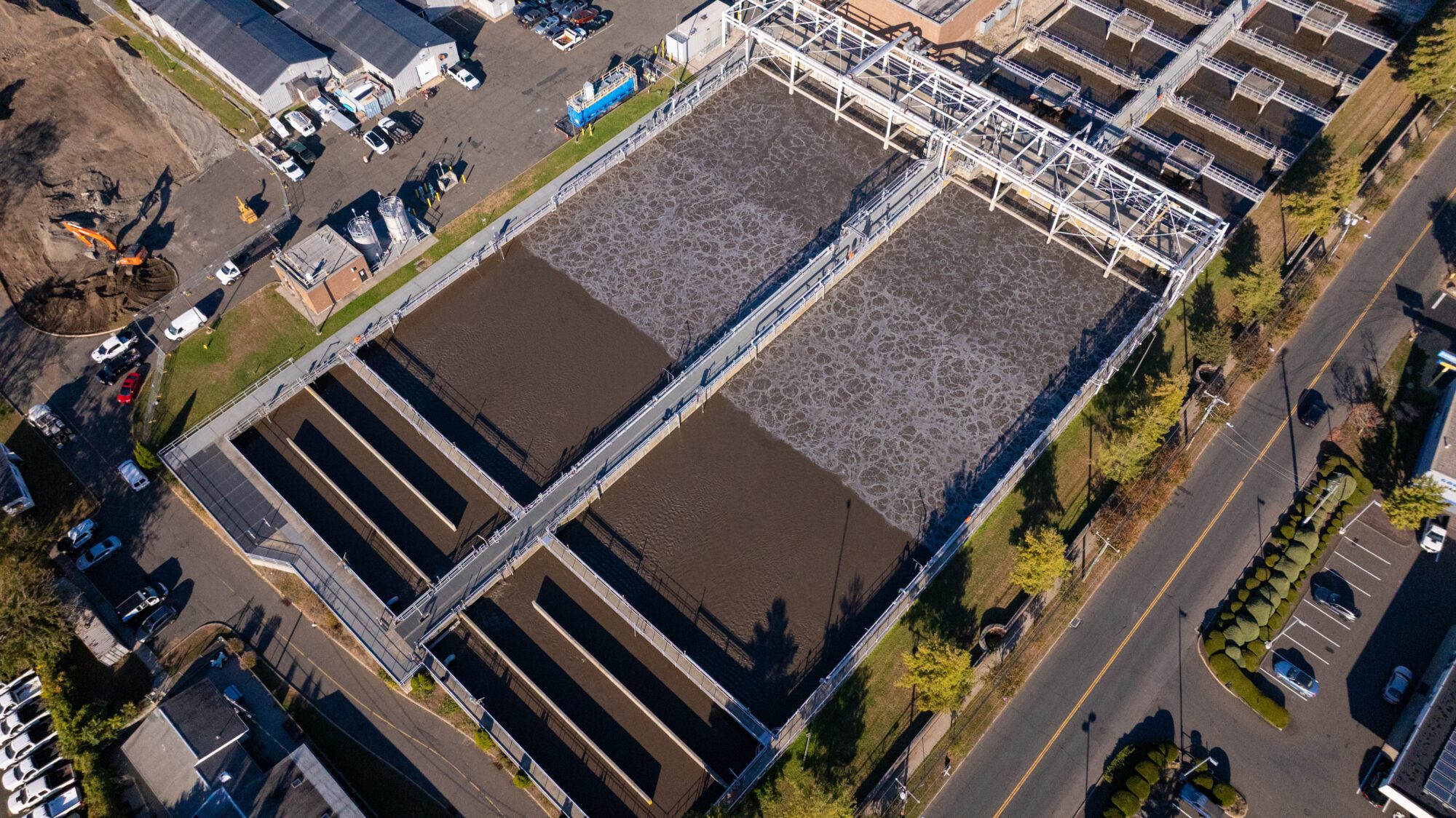
Optimize your operations
We know that the first priority of wastewater treatment is meeting requirements for public safety and the environment. We’re here to help you do that — and more.
With CREW, wastewater facilities can surpass compliance and actively demonstrate a commitment to environmental stewardship.
Our process streamlines treatment, improves cost efficiency, and reduces your carbon footprint — aligning better environmental outcomes with a better bottom line.
The result is a solution that benefits your facility and serves your community.
CREW’s process intensification
Alkalinity enhancement
CREW’s installation enables Wastewater Alkalinity Enhancement (WAE): a wastewater process optimization technology that improves treatment within existing infrastructure and removes greenhouse gases.
Cost-savings with CREW over traditional chemical treatment:
30%Realize process benefits
By replacing expensive, hazardous, and carbon-intensive chemicals like caustic soda or quicklime, CREW delivers safer, more consistent treatment at a lower cost and lower carbon footprint than standard methods.
While facilities currently using alkaline chemicals achieve significant cost savings, all utilities can achieve cost savings with increased treatment capacity, reduced aeration needs, reduced need for other chemicals like coagulants, and other benefits.
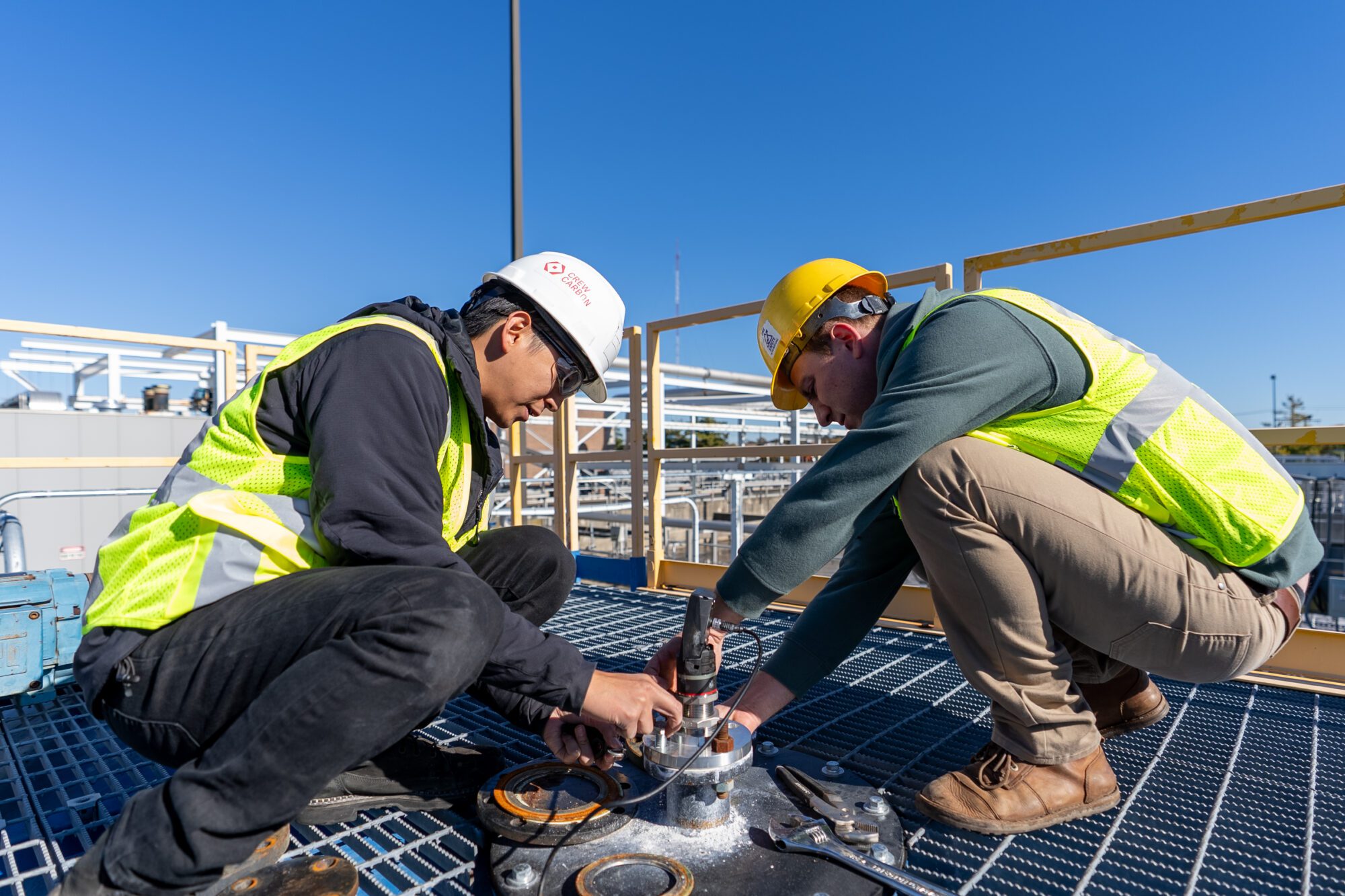
Wastewater process expertise
Every facility is different. CREW’s engineers bring deep experience across various process configurations and work alongside your operators to tailor WAE to your process.
CREW provides ongoing support for utilities through startup, seasonal shifts, and other process changes to optimize the benefits of WAE and increase the capacity of existing infrastructure.
Operational benefits of alkalinity enhancement:
-
Optimized biological nutrient removal
Through CREW’s process intensification technology, elevated alkalinity enhances nitrification rates and higher pH encourages Bio-P under stringent standards.
-
Improved settleability
With CREW’s technology, dissolved calcium binds flocs into tighter, stronger structures, while residual mineral product particles add ballast — producing denser flocs that settle faster.
-
Cost savings
We provide compounding opex savings, using a more cost-effective alternative to replace conventional alkalinity chemicals and reduce coagulants and polymers. On top of operating savings, utilities have been able to defer large capital upgrades due to process improvements from CREW’s low-capex solution.
-
Enhanced safety
Our solution eliminates risk exposure for operators by replacing conventional, hazardous chemicals.
-
Reliable compliance
CREW’s technology results in stable, more consistent biological and nutrient treatment, which leads to better effluent quality to help facilities meet permit regulations.
-
Decarbonization
We reduce facilities’ carbon footprint by replacing carbon-intensive chemicals with locally-sourced minerals as well as reducing process emissions.
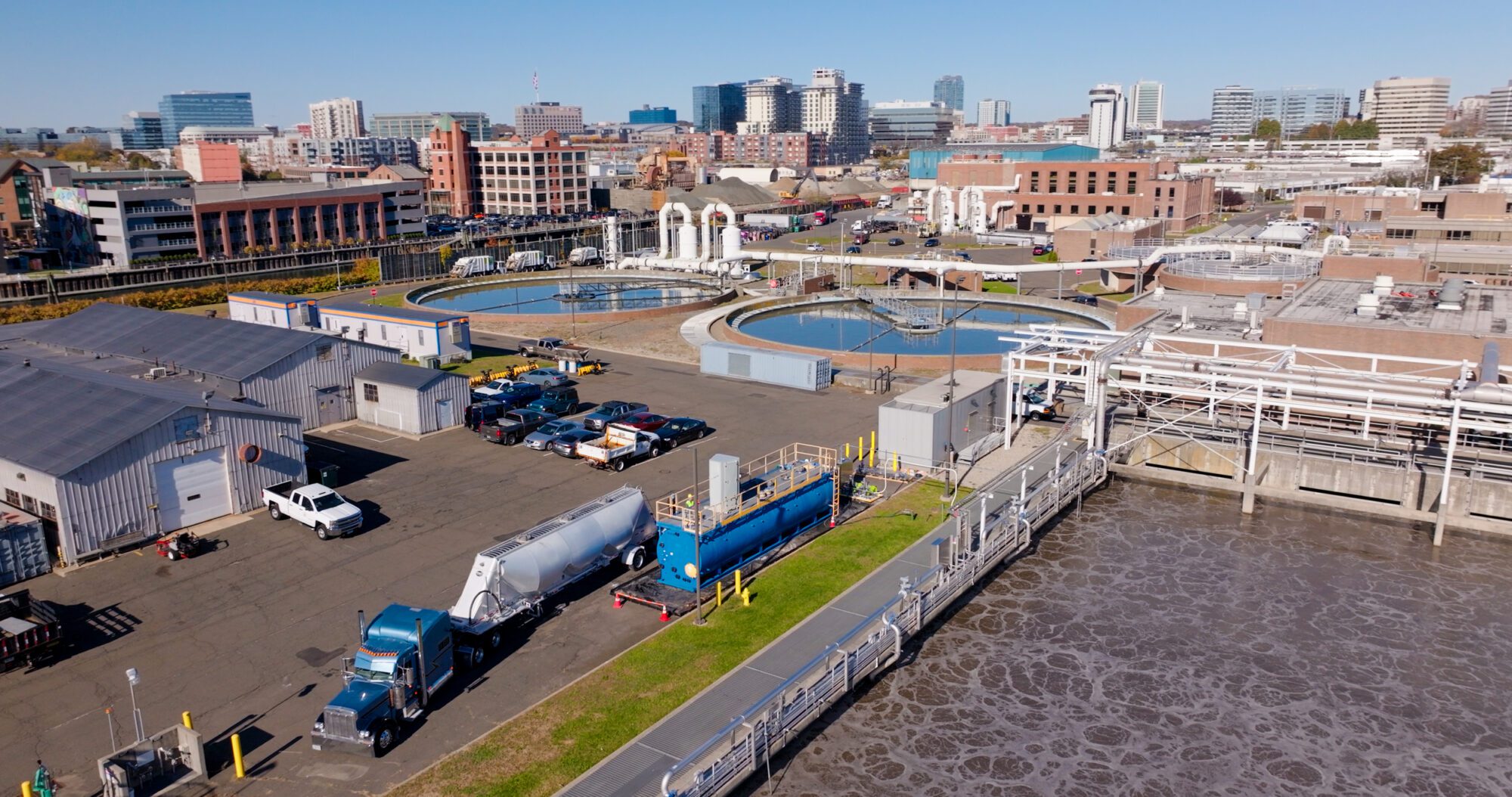
Wastewater operator partners
Our partner facilities worldwide are currently realizing process benefits, gaining cost-efficiency and actively removing carbon from the environment.

The combined approach also enhances biomass settling for an intensification benefit, while simultaneously providing very low secondary effluent turbidity — a challenge for other competing approaches. The overall solution is transformational for facilities attempting to do biological nitrogen and/or phosphorus removal under the typical alkalinity-limited conditions experienced at many treatment plants. As we extend this approach to our Virginia Initiative Plant, we expect significant capital and operational savings for HRSD.”
HRSD Chief Technology Officer, Dr. Charles Bott