
CREW in the news
Learn how we are improving wastewater treatment, removing CO2, and scaling to meet immense opportunity.
CREW Carbon Included in Whirlpool Corporation’s Carbon Removal Portfolio, Structured Through ClimeFi
CREW Carbon, Inc. announced today that CREW is included as one of four carbon removal suppliers in the Whirlpool Corporation carbon removals portfolio structured together with ClimeFi. The portfolio pairs firm offtake commitments, guaranteeing Whirlpool a steady stream of high-quality carbon removal, with standalone options that let Whirlpool reserve access to additional volume as its […]
Why Wastewater Carbon Removal Matters for Oceans
Builders Vision invested in CREW’s Series A, marking the platform’s first investment in CDR technology. Builders Vision is an investment and philanthropy platform that catalyzes scalable solutions in the food and agriculture, energy, and oceans sectors. This investment in CREW points to something Builders Vision sees across its sectors: the largest opportunities for scale often […]

CREW Carbon Signs Offtake Agreement With Microsoft for Wastewater Carbon Removal
“Microsoft’s offtake agreement with CREW supports the advancement of a novel, wastewater-based approach that is highly durable and measurable,” said Phillip Goodman, Carbon Removal Portfolio Director. “CREW has shown that carbon removal in the wastewater sector is implementable and scalable with high Monitoring, Reporting and Verification (MRV) certainty.”

Anthropic, Google, Other Tech Companies Commit $915 Million to Pull Carbon Out of the Sky
Also in Frontier’s focus is Crew Carbon, which it invested in within the last tranche. The company adds limestone in wastewater treatment facilities to counter the carbon released when sewage is treated. “We are showing that carbon removals can happen and can happen quickly,” said Joachim Katchinoff, co-founder and chief executive of Crew. Katchinoff said the funding from Frontier had been transformative, as it allowed the company to demonstrate it can remove carbon and is now delivering credits to customers. He said the company has offtake agreements signed into the next decade. Katchinoff added this new round of funding should “ultimately lead to a future where there’s more buyers,” including those coming from compliance markets.

A Climate Fix That Could Cut Your Water Bill
Helping the climate can be a tough sell when the green option costs more. But what if it saves you $400 million? That’s the head-scratcher confronting Charles Bott. He is the technology chief for Hampton Roads Sanitation District, a public water utility in coastal Virginia serving nearly 2 million people. Tough water-quality rules are straining its wastewater plants, and it has been considering an expensive upgrade at one of them. But that investment has been put on hold thanks to a startup offering a way to squeeze more out of the existing facility. Yale spinout CREW Carbon uses a simple ingredient—ground-up limestone—to improve the efficiency of sewage plants. As a bonus, it keeps carbon dioxide out of the atmosphere.
CREW Raises $25M of Funding to Scale Wastewater Treatment Optimization Technology as Climate Solution
Water-tech company closes round across equity and non-dilutive capital sources to deploy patented technology at more wastewater utilities, reducing costs and delivering verified carbon dioxide removal BROOKLYN, NY — CREW Carbon, Inc. (CREW) announced today it has closed an oversubscribed Series A round led by Burnt Island Ventures with participation from AP Ventures, Sony Innovation […]
Is heavy industry the future of carbon removal in the US?
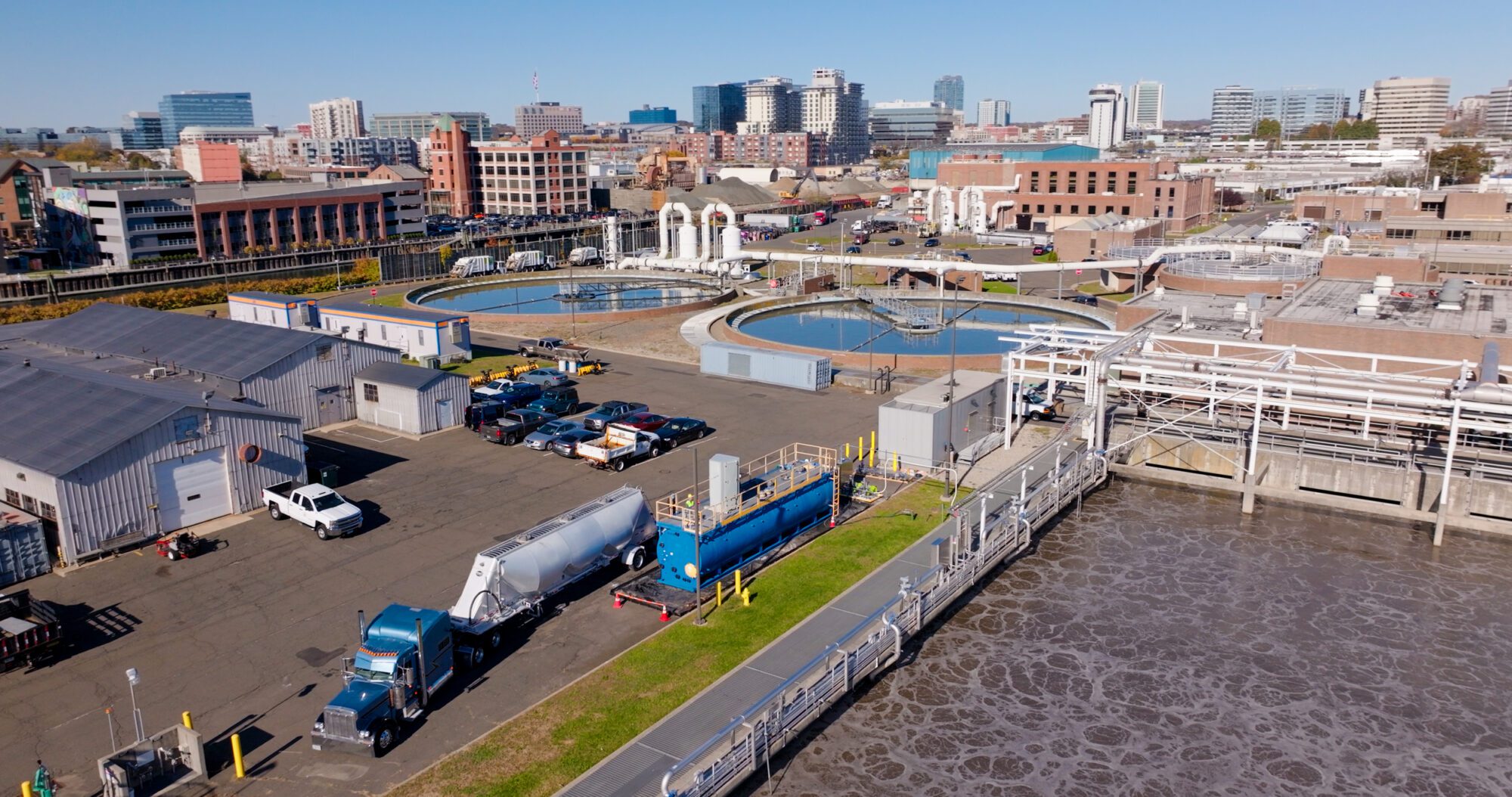
America’s water infrastructure is old, and requires billions of dollars of investment to make it efficient, he explained. He pointed to CREW, a Brooklyn-based startup that provides wastewater treatment facilities with a process intensification solution to improve performance, lower costs, and permanently remove greenhouse gases, as an example. CREW is essentially applying enhanced rock weathering, a form of alkalinity enhancement, to wastewater reactors by adding a mineral-dosing retrofit that helps manage nutrients and improves treatment.