
Process Intensification & Decarbonization
CREW provides wastewater treatment facilities with a process intensification solution that improves performance, lowers costs, and permanently removes greenhouse gases.
Our solution
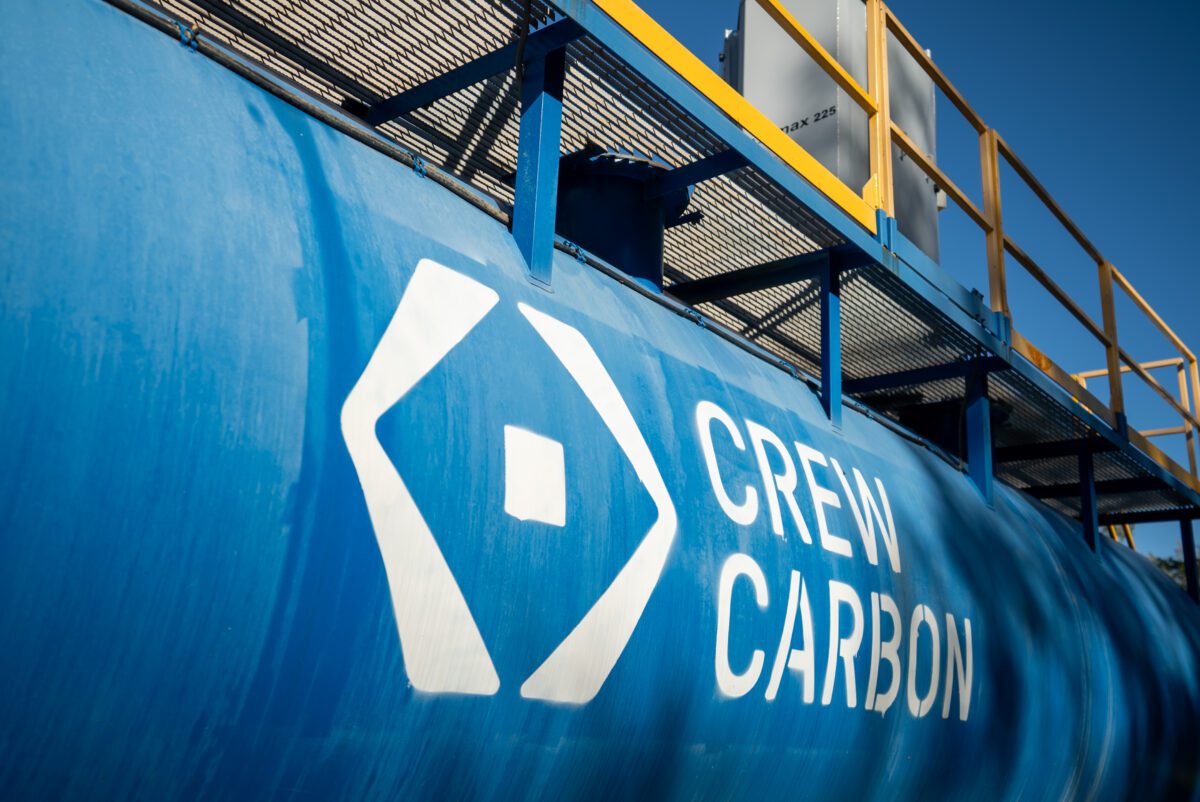
CREW’s process intensification technology enhances alkalinity through dosing of CREW’s calcium-based product that optimizes biological nutrient removal, improves settleability, reduces chemical usage, and saves cost.
Our data-driven solution integrates seamlessly into operators’ existing processes, with measurable results in weeks, to better serve communities.
CREW can flexibly tie into the plant’s biological treatment process.
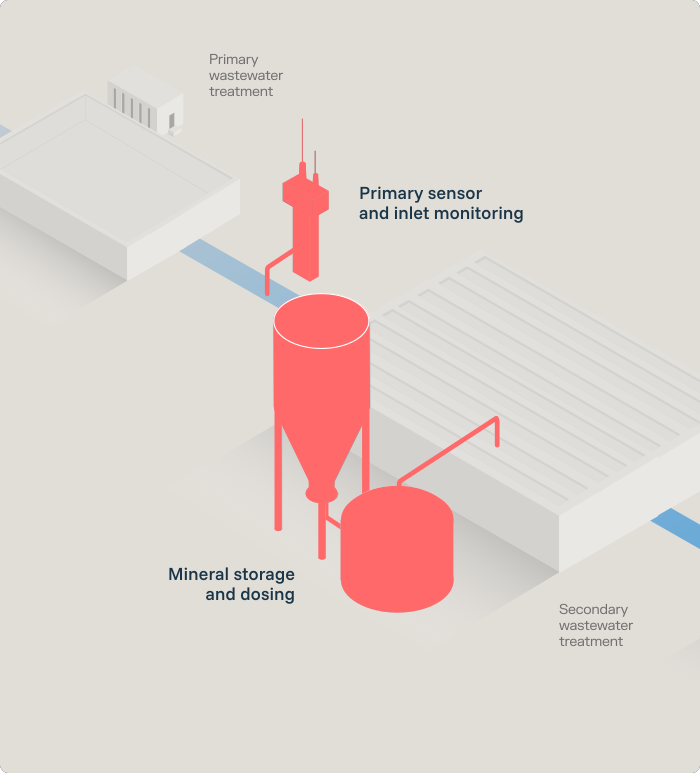
Seamless integration into the existing wastewater treatment process
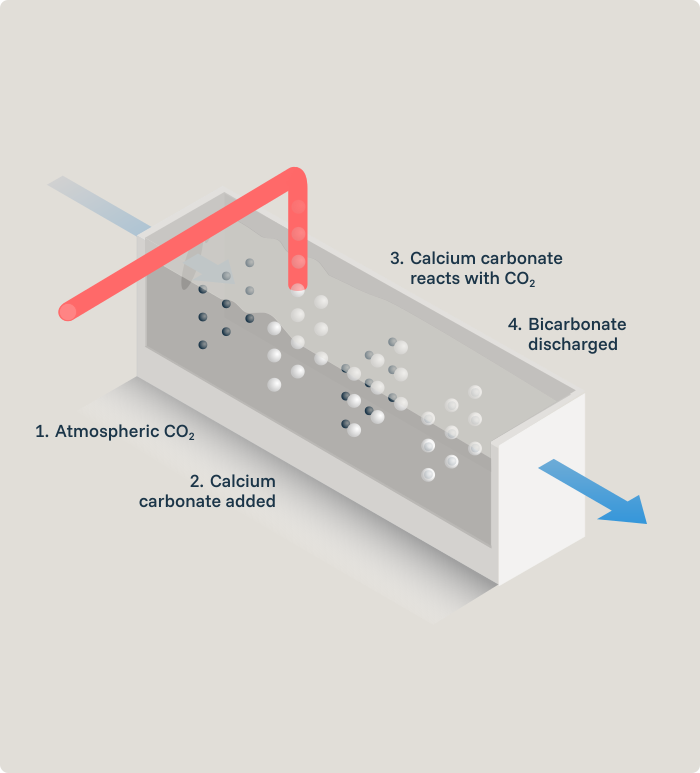
Natural minerals remove greenhouse gases and improve treatment efficiency
Operational benefits of alkalinity enhancement:
-
Optimized biological nutrient removal
Through CREW’s process intensification technology, elevated alkalinity enhances nitrification rates and higher pH encourages Bio-P under stringent standards.
-
Improved settleability
With CREW’s technology, dissolved calcium binds flocs into tighter, stronger structures, while residual mineral product particles add ballast — producing denser flocs that settle faster.
-
Cost savings
We provide compounding opex savings, using a more cost-effective alternative to replace conventional alkalinity chemicals and reduce coagulants and polymers. On top of operating savings, utilities have been able to defer large capital upgrades due to process improvements from CREW’s low-capex solution.
-
Enhanced safety
Our solution eliminates risk exposure for operators by replacing conventional, hazardous chemicals.
-
Reliable compliance
CREW’s technology results in stable, more consistent biological and nutrient treatment, which leads to better effluent quality to help facilities meet permit regulations.
-
Decarbonization
We reduce facilities’ carbon footprint by replacing carbon-intensive chemicals with locally-sourced minerals as well as reducing process emissions.
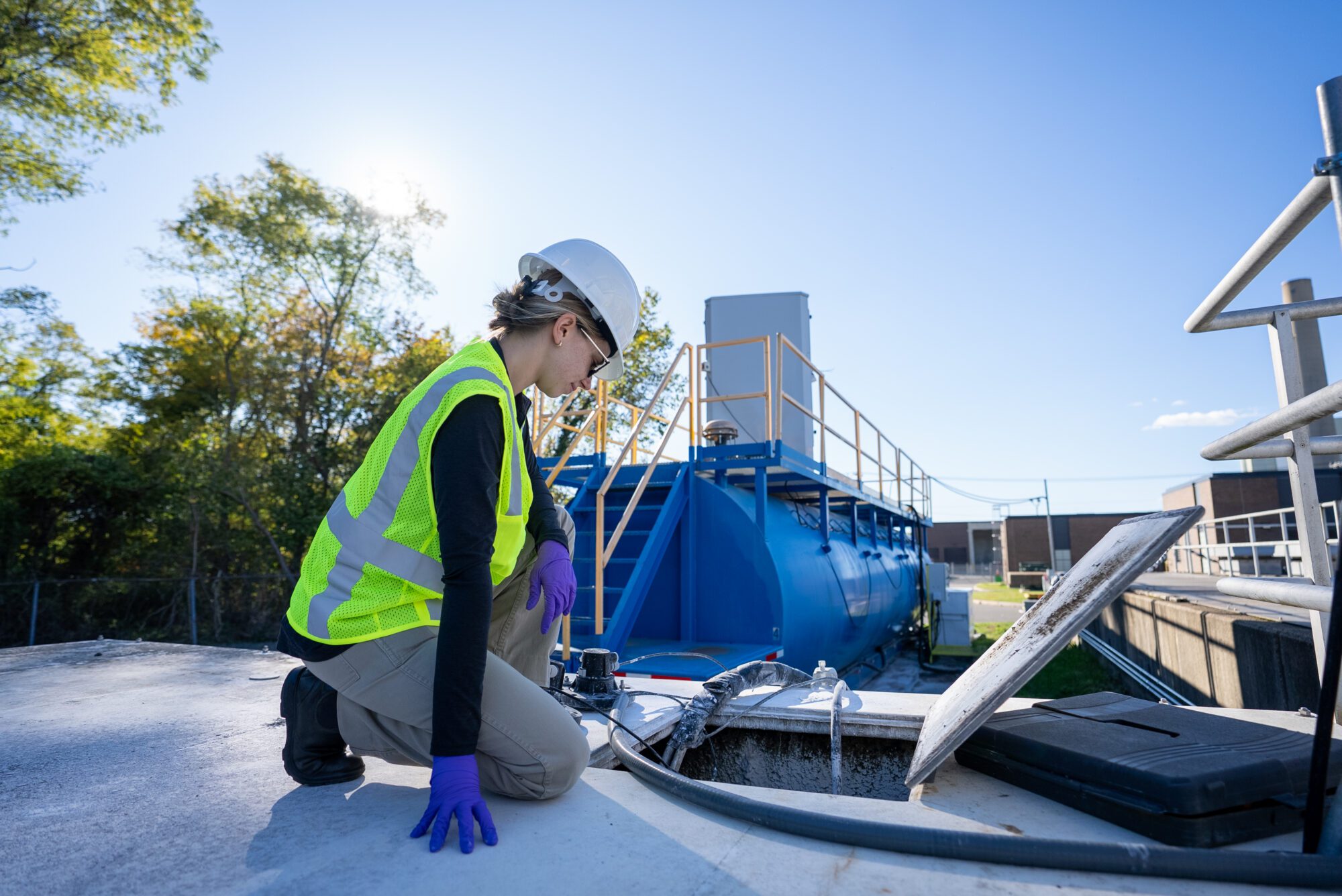
Why carbon buyers work with CREW:
-
Closed-system measurement
Compared to traditional enhanced weathering or alkalinity enhancement, our closed-system approach deploys inlet and outlet monitoring for extremely precise measurement of carbon removal.
-
Immediately deployable and scalable
We utilize existing wastewater infrastructure, existing permits, and abundant minerals to deploy faster than other CO2 removal methods.
-
Continuous and permanent
Investment in carbon removal technology provides durable, year-round CO2 removal that can be quantified in real time today — not years from now.
Projects spotlight
EBPR Facilities – HRSD (Hampton Roads Sanitation District)

10MGD
- Potentially deferred construction of a $450 million tertiary/polishing plant by consistently meeting stringent effluent nitrogen and phosphorus limits
- Maintained low SVI in summer months, when treatment is historically more challenging
- Prevented filamentous bulking events throughout the winter
- Saved on sodium hydroxide and alum costs
- Verified CO2 removal project
High-Purity Oxygen Facility – Northeast U.S.
25MGD
- Stabilized pH at 7.0 – 7.5
- Reduced SVI (~20%)
- Decreased sludge blanket levels
- Achieved MLSS targets
- No reduction in VSS
- Decreased total nitrogen 22%
- Prevented TSS excursions during wet weather events
- Saving hundreds of thousands of dollars on sodium hypochlorite and sodium bisulfite
- Verified CO2 removal project
Our partners
Our customers include some of the largest companies in the world. This includes buyers through the Frontier advanced market commitment and ClimeFi. We also have collaborators who are experts in water treatment and engineering, climate, and environmental science.


















News
A Climate Fix That Could Cut Your Water Bill
Helping the climate can be a tough sell when the green option costs more. But what if it saves you $400 million? That’s the head-scratcher confronting Charles Bott. He is the technology chief for Hampton Roads Sanitation District, a public water utility in coastal Virginia serving nearly 2 million people. Tough water-quality rules are straining its wastewater plants, and it has been considering an expensive upgrade at one of them. But that investment has been put on hold thanks to a startup offering a way to squeeze more out of the existing facility. Yale spinout CREW Carbon uses a simple ingredient—ground-up limestone—to improve the efficiency of sewage plants. As a bonus, it keeps carbon dioxide out of the atmosphere.

HRSD partners with CREW to deploy process intensification technology at Norfolk treatment plants
HRSD has announced a long-term partnership with CREW to deploy a process intensification solution at two wastewater treatment facilities in Norfolk: the Virginia Initiative Treatment Plant and the Army Base Treatment Plant. The partnership follows a yearlong testing phase in which CREW’s technology — which uses calcium carbonate dosing to optimize treatment processes and remove greenhouse gases — demonstrated improvements in biological nutrient removal and plant performance, according to the organizations.
Could your city’s sewage capture carbon? A New Haven startup is putting it to the test.
In Fall River and other cities, CREW is adding limestone to wastewater treatment, betting it can deliver better sewage-processing while also combatting climate change.

Climate tech firms get $80 million to pull carbon from paper mills, sewage
CREW provides the opportunity for large industrial players to integrate carbon removal technologies and start to deliver carbon removal cheaply and at scale.